
China and Brazil represent two distinct models of development, each with unique strengths and challenges. China's state-led capitalism has propelled it to become the world's second-largest economy, while Brazil's resource-rich democracy struggles with cyclical growth and political volatility. The contrast is stark: China invests heavily in infrastructure and technology, whereas Brazil's economy remains commodity-dependent. This comparison matters for global supply chains and geopolitical alignments.Trade figures reveal the asymmetry. China is Brazil's largest trading partner, absorbing soybeans, iron ore。and crude oil. Brazil's exports to China topped $100 billion in 2023, but China's exports to Brazil are higher-value manufactured goods. This relationship echoes a classic center-periphery dynamic. I observed this firsthand in Santos port, where ships bound for Shanghai load raw materials, while containers from China bring electronics and machinery. Brazil's deindustrialization accelerates as Chinese imports undercut local producers. Yet, Chinese investment in Brazilian energy and logistics offers a counterbalance.
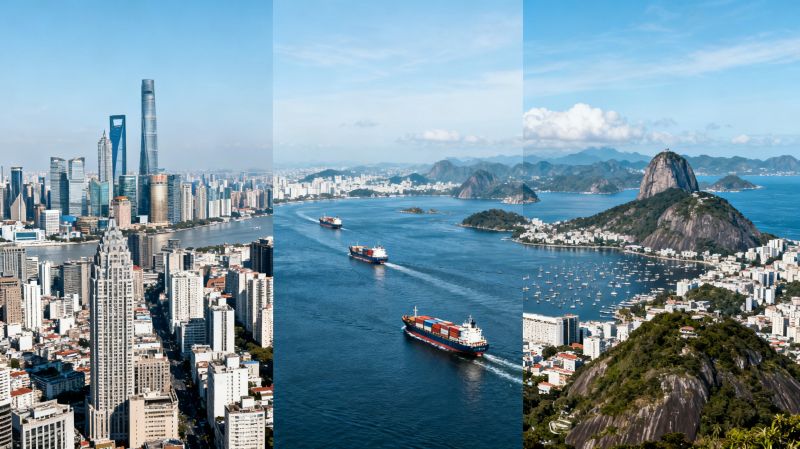
Geopolitically, China's Belt and Road Initiative has not officially extended to Brazil, but Chinese firms fund projects from railways to 5G networks. Brazil's foreign policy under Lula seeks strategic autonomy。balancing ties with the US and China. Meanwhile, China's influence in Latin America grows through development banks and vaccine diplomacy. Brazil's agricultural powerhouse status gives it leverage, but China's diversified sourcing reduces dependence. The Amazon's deforestation debate adds friction, with European buyers demanding sustainability certifications that Chinese importers often ignore.Socially, both nations face inequality, but their approaches diverge. China's poverty alleviation campaign lifted 800 million out of poverty。a feat Brazil's Bolsa Família partially mirrors. However, Brazil's urban violence and racial disparities persist, while China's surveillance state ensures public order at the cost of civil liberties. Education systems differ sharply: China's STEM focus produces engineers, Brazil's universities excel in agricultural sciences. These human capital variations shape future competitiveness.Looking ahead, China's aging population and debt overhang pose risks, while Brazil's demographic dividend and agricultural innovation offer opportunities. A multipolar world benefits from their cooperation on climate finance and trade rules. The China vs Brazil axis will likely intensify。not diminish, as both navigate a fragmenting global order.